

The Read
Durness, and what a tight shot would have missed
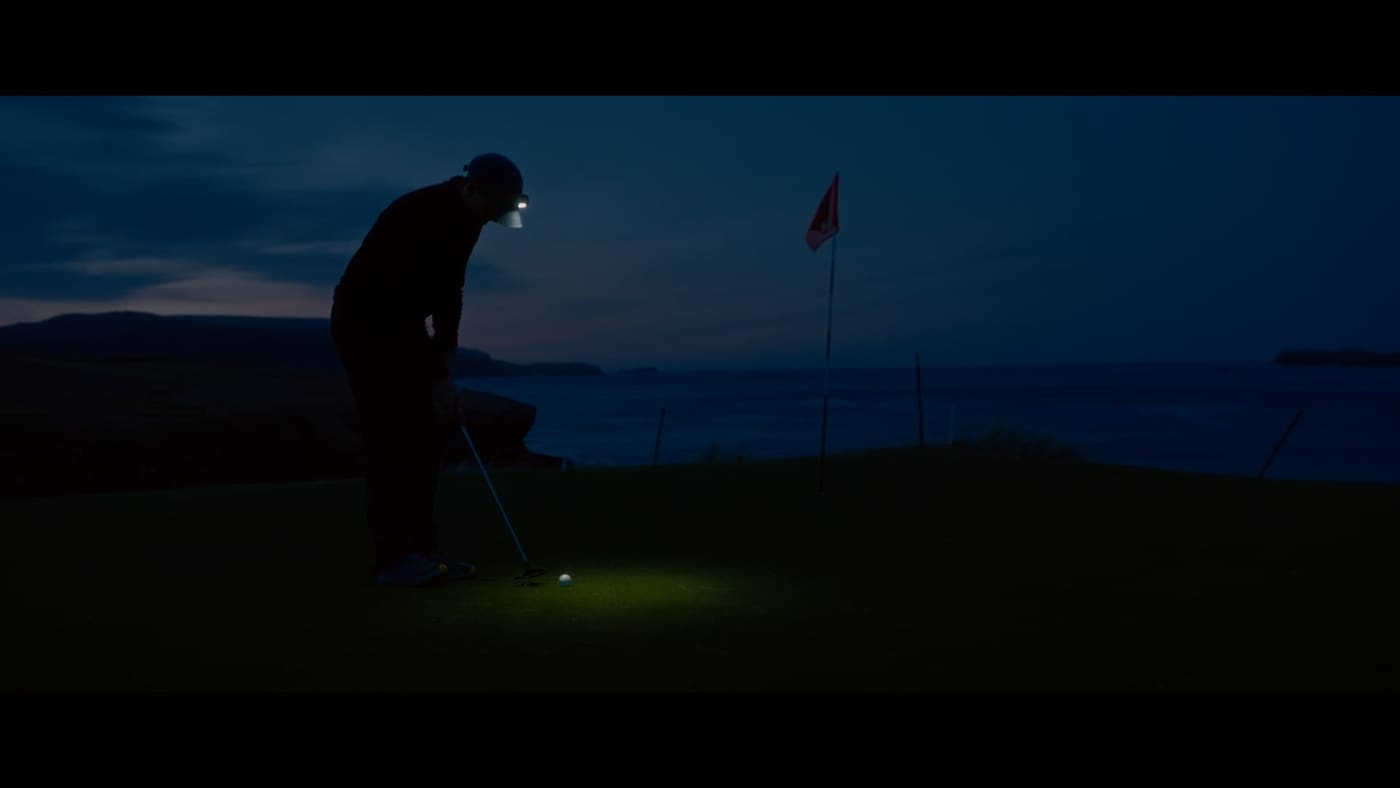
A wide, static frame of a putt taken by head torch on the shortest day of the year. It holds the stroke and the target together, which the conventional tight shot cannot do. Then his head lifts, the beam goes with it, and the ball finishes its run in the dark.
Quiet Eye Productions, from Chasing Light
- Where the camera is
- The camera sits side on and wide, and it does not move. Held in one frame are the golfer, the ball, the putter face, the flag and the sea behind it. The only light falling on the ball is the head torch he is wearing, which means the lighting and the looking are the same instrument.
- What the frame holds
- Wide is also what keeps the landscape, which is the reason to be at Durness in the first place, and it holds the last of the fading light low and to his left. Then the colour does the rest of the work. Green inside the pool of head torch light, deep blue across the sky above it, and the red in the flag answering the red still left in the sunset. None of that survives a tight lens.
- What it would have missed
- The conventional shot here is tight on the hands. It reads the stroke beautifully and it cannot show you the target, so the putt and the thing the putt is aimed at never share a frame. Cut to the hole afterwards and you have shown the result rather than the decision. The wide frame refuses that trade: you see what he is looking at while he is still looking at it.
- What it catches instead
- Watch what happens after contact. His head comes up, the beam goes with it, and the ball finishes its run in the dark. Nobody lit that moment and nobody could have. The light left because he did, and a camera positioned to catch the stroke alone would have cut away before it happened.
This frame is from Chasing Light. The idea behind the way we read it is set out on the quiet eye.