

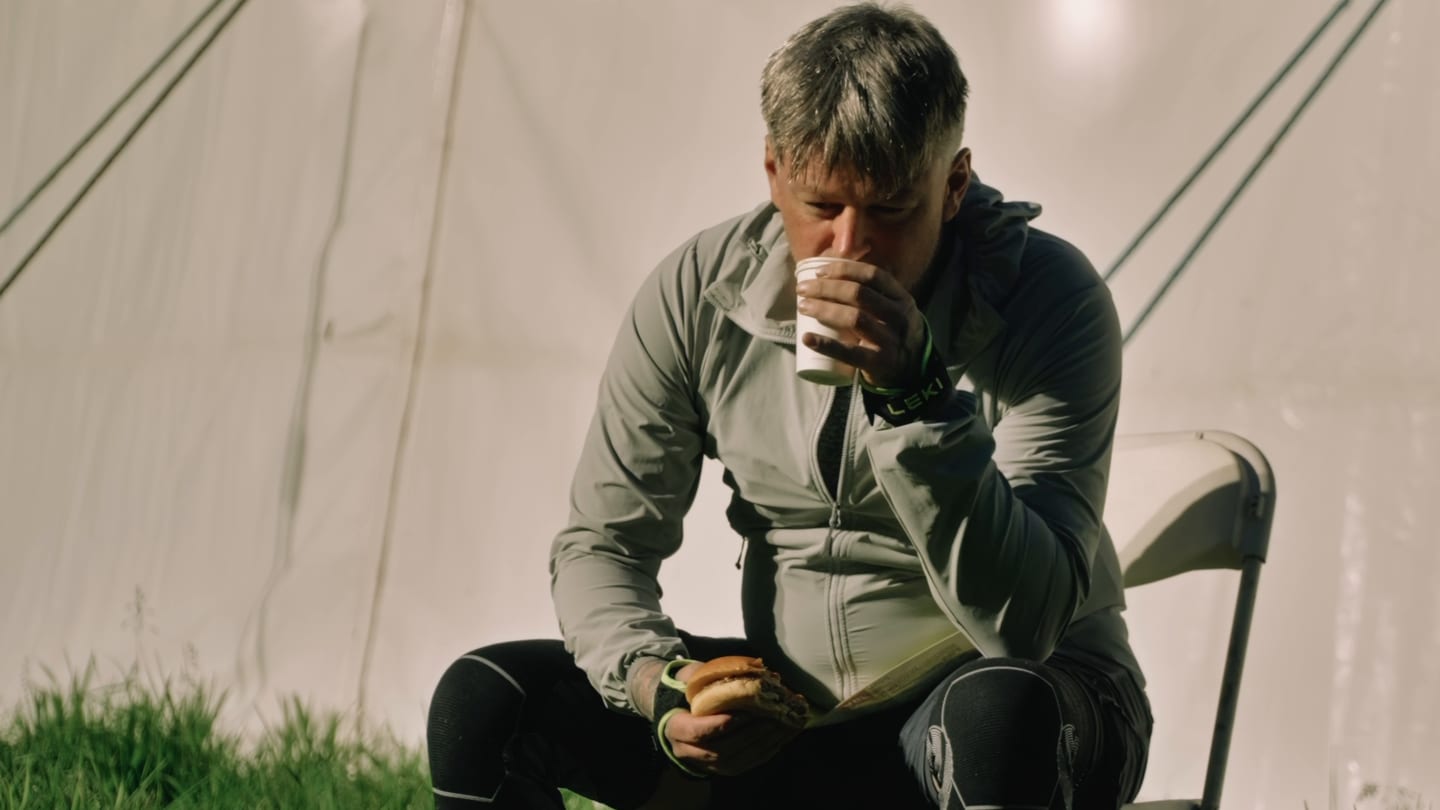
Grit is quiet. That is not my line. A soldier said it to me late in the Cateran Yomp, the 54 mile Highland walk that raises money for the Army Benevolent Fund. I had asked them about grit at mile seven, near the start, and they told me I had asked in the wrong place.
Why was mile seven the wrong place to ask?
Because at mile seven nobody has been tested yet. They were blunt about it. The weather was warm, knees were fine, nobody had blisters. What I recorded was people telling me what they were going to do, how determined they were, what time they were going to finish in. They called that noise, and said it meant nothing.
The line I got instead was the one that named the film. Grit is not noise. Grit is quiet.
What is grit, then?
It is what is left when motivation has gone. That is the definition the event kept producing, in different words, from people who had no idea they were agreeing with each other.
One walker put it as pure mental and physical determination to get the job done. Another said it was the point where failure stops being an option and you simply keep going. A third, somewhere past the worst of it, said they had run out of every single motivation they had and that what was left was determination. The film opens with someone saying grit and stupidity are probably the same thing, which is the funniest and possibly the truest answer I got.
The common thread is that none of them described a feeling. They all described a decision, made repeatedly, while feeling terrible.
Where does grit actually show up?
Late, and quietly, and usually with nobody watching.
The Yomp is 54 miles inside 24 hours. The first stretch to the top of Glen Shee is hard walking but it is still walking. After that it turns into endurance, and endurance happens mostly in the dark. That is where I found the material. Blisters have formed and popped and formed again on the raw skin. Knees have gone. The people still moving are not saying much, because there is nothing left to say and no audience to say it to.
The soldier’s own version of what grit looks like is the plainest description of endurance I have recorded. Get your head down. Put one foot in front of the other. Keep going until the job is done. Not making statements. Not telling more people what you are going to do.
What does this change about filming an event?
It moves the camera, and it moves the clock.
Most event films are made at the start line, and there are good reasons for it. The light is decent, the branding is clean, everybody is smiling, and the crew can park. The trouble is that the start line is mile seven. It is where the noise lives. Shoot only there and you come away with a film about anticipation, which is a different and much thinner subject than the one the event is actually about.
So I stayed out. The film that matters was shot in the second half, at night, on the hill, with people who did not particularly want a camera near them and were generous enough to talk anyway. That is harder in every practical sense. It is also the only place the answer existed.
This is the same argument we make about broadcast coverage of sport. The cameras arrive for the result and leave once the result is in, and the part worth watching is the part nobody filmed. An endurance event makes that unusually easy to prove, because the interesting hours are the ones with no spectators. More on why we keep returning to endurance in why endurance makes the best documentary subject.
Why does a film company care what grit is?
Because it is the same thing we named the company after.
Quiet eye is the sports psychology term for the long, still gaze a performer holds on a target in the moment before a decisive act, when the pressure is highest and the noise is loudest. It is a measurable thing in a golfer or a marksman, and it lasts a second or two. Grit on a 54 mile walk is the same behaviour stretched across a night. Both are about what a person does once the noise drops away. The full account of the research is on quiet eye theory in sport.
I made two films from the 2026 Yomp. The long one is 54 Miles of Grit, which runs just over nine minutes and follows the event from Blairgowrie through the night to the finish. The short one is What Grit Really Means, two minutes of the soldier’s answer more or less uncut. Watch that one first if you only watch one.
Who films endurance events in Scotland?
We do. Quiet Eye Productions is a sport and adventure film company founded in 2024 by Dr Stefan Morrocco and Harry Whiteley, working out of London and Perth.
One piece of housekeeping on this one. The Army Benevolent Fund commissioned the Yomp films from me directly rather than through Quiet Eye Productions, so they sit on this site as my own credit rather than a company job. Harry has his own history with the event, as project lead for the 2024 Yomp, which raised close to £600,000 for the Army Benevolent Fund with 1,250 participants on the hill. He had no hand in these films.
Event highlights are one of the four things we make, alongside documentaries, athlete led YouTube and branded campaigns. The full case study for 54 Miles of Grit has the film itself, and you can see the rest of our films, including Balance, the eventing film we made an hour down the road at Scone Palace.
If you run an event worth filming properly, tell us about it.