

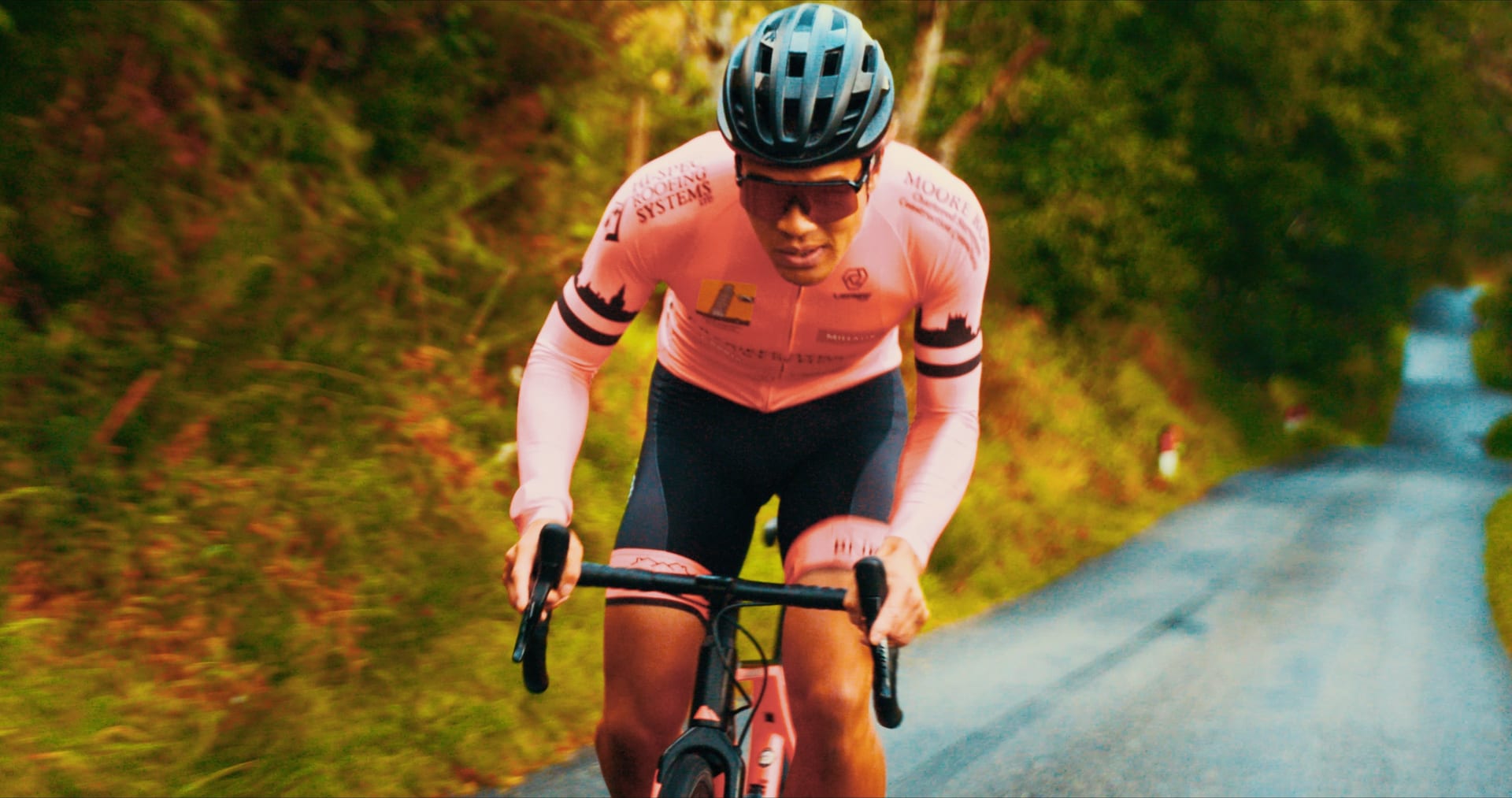
Endurance makes the best documentary subject because time does the work a script cannot. A race that lasts weeks, or a challenge that runs through the night, strips a person down to what they actually are. The mask slips. The story stops being about the result and starts being about the person. That is where the film lives.
What does endurance reveal that a quick contest cannot?
A ninety minute match gives you drama. A multi day expedition gives you a character. The difference is time under pressure. When a challenge lasts long enough, performance stops being a pose. Nobody can hold a front for days on end. Fear arrives, doubt arrives, the body starts to fail, and the camera is still there. What you capture is not an athlete playing a role. It is a person meeting the truth about themselves.
That is the raw material of documentary. Not the finish line, the middle of the night before it.
Where do we see this?
We see it in the events we film and the events we come from. Take the Cateran Yomp, the 54 mile Highland endurance challenge Harry led as project lead in 2024, which raised close to £600,000 for the Army Benevolent Fund with 1,250 participants on the hill. A distance like that turns a charity walk into a test. The stories are not on the route card. They are in what the route does to people over a long day and a longer night.
The same is true wherever the clock keeps running. A long climb, a night stage, a solo push into bad weather. The event sets the pressure and then simply waits. Our job is to be there when the front slips and the real person shows.
What did the 2026 Cateran Yomp show?
In June 2026 I filmed the official film of the Yomp for the Army Benevolent Fund, 54 miles across the Perthshire hills in 24 hours, starting and finishing in Blairgowrie. I asked walkers what grit meant at mile seven and got intention: what they were going to do, how determined they were, what time they expected to finish. I asked again in the second half, in the dark, and the answers were quieter and much harder to say. A soldier told me I had asked in the wrong place, and that grit is not noise. Grit is quiet.
That gap between the two sets of answers is the structure of the film, and it only exists because the event lasts long enough to produce it. A short contest would have given me the first answer and nothing else. Read what grit looks like on the Cateran Yomp for the full account, or watch Cateran Yomp 2026: 54 Miles of Grit, just over nine minutes long.
Why does it suit our way of working?
Because endurance rewards patience, and patience is how we shoot. We do not chase the obvious beat. We stay, we watch, we wait for the moment the noise drops away and the real thing shows itself. That is the same held focus we take our name from. Read The Quiet Eye for where that idea comes from.
Endurance gives you pressure that lasts, characters that cannot hide, and a natural arc from start to finish. For a film company built around focus under pressure, there is no better subject. See how we treat it in our work.
The film we are making now is exactly this shape. Danny’s Big Adventure follows Danny Mavor’s attempt on the Great Glen Way, coast to coast from Fort William to Inverness, on a heavily modified 4x4 wheelchair. Filming starts on 22 September and runs until the evening of Friday 25 September.