

The Quiet Eye
What is quiet eye theory, and why does it matter in sport?
Quiet eye is the final steady gaze a performer holds on a target in the moment before a decisive action. The sports scientist Joan Vickers named it in 1996. Longer quiet eye separates experts from the rest. It is focus made measurable, and it is where a contest is often decided.

Where does the term come from?
Quiet eye was named by Joan Vickers, a professor of kinesiology at the University of Calgary who has studied gaze in sport since the early 1980s. She defined it precisely. The quiet eye is the final fixation on a single target, held within three degrees of visual angle, lasting at least 100 milliseconds before the decisive movement begins. She set it out in full in her 1996 research and again in her 2007 book, Perception, Cognition, and Decision Training.
The idea is simple to state and hard to do. Before the putt, the free throw, the penalty, the shot, the eye settles on one place and stays there. The body follows a still gaze. The best performers give themselves that stillness for longer.
What does the research show across sport?
The numbers are stark. Vickers filmed the eyes of basketball players at the free throw line. Elite shooters fixed their gaze on the hoop for around 972 milliseconds before release. Weaker shooters managed around 400. In golf, skilled putters hold a quiet eye of roughly 2.5 to 3.0 seconds, against 1.0 to 1.5 for less skilled players.
The pattern repeats across trap shooting, billiards, penalty kicks in football and the putt. Experts look longer. Within a single player, the successful attempts carry a longer quiet eye than the misses. A 2016 meta analysis in the Journal of Sport and Exercise Psychology gathered the studies and found the effect holds across sports.
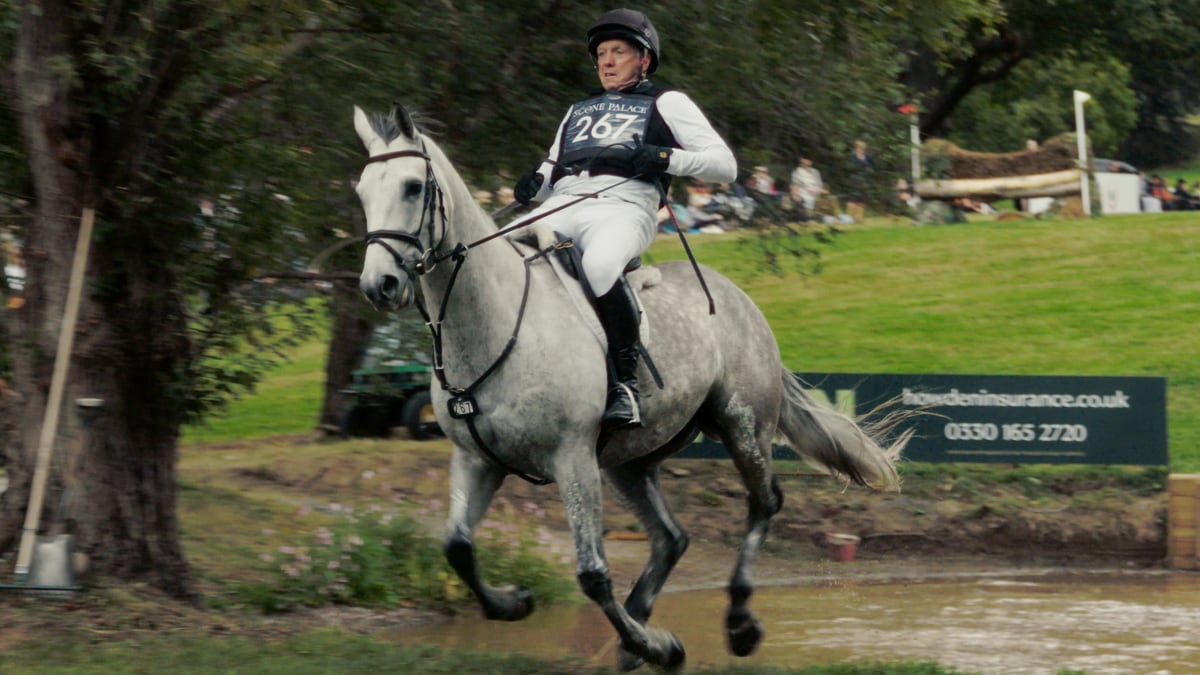
Quiet eye across disciplines
The putt. A skilled golfer settles the gaze on the back of the ball and holds it through the stroke, steady for a beat after contact.
The free throw. The elite shooter finds the hoop early and stays there, more than twice as long as a weaker shooter, before the release.
The penalty and the shot under pressure. As anxiety rises the gaze tends to dart and hunt for threats. A held quiet eye is what resists that, and it can be trained.
Why is it our lens?
Because the contest narrows to a single moment, and in that moment the noise drops away. The crowd, the score, the stakes, all of it falls outside three degrees of visual angle. What is left is one target and one still gaze. We build films around that moment. The held focus before the effort, the calm before it goes right or wrong.
Stefan came to film from sport and science. A former performance analyst on the UCI Mountain Bike World Cup circuit and a research scientist by training, he spent years studying what actually decides a performance. That is the eye we bring to the work. See it in our films and read more in the journal.
More on focus, pressure and sport documentary
10 pieces- 01 What quiet eye looks like from behind the camera The research tells you where an expert looks. This is what that changes when you are the one deciding where to point the lens.
- 02 How we made Chasing Light in a single day of failing light Our own film. One winter solstice, the UK's most northerly Munro in the dark, then a race to play golf at Durness before the light was gone.
- 03 Why does endurance make the best documentary subject? Long events strip a person down to what they actually are. That is where the film is.
- 04 What does a scientist's eye bring to sport filmmaking? Two decades behind the camera, and years before that reading landscapes and race data. Here is what the science leaves behind.
- 05 Why is Danny Mavor doing the Great Glen Way in a wheelchair? Seven years after the crash that changed everything, Danny is going coast to coast across the Highlands. We are filming the attempt.
- 06 Where in Scotland do we film sport and adventure documentary? Ben Hope in the dark, Durness on the shortest day, Scone Palace, the Cateran Yomp at Blairgowrie, and the Great Glen Way in September.
- 07 How we made Balance across four days at Scone Palace Four days of eventing at the 2025 Scone Palace International Horse Trials, filmed without following one horse and rider, cut into a ten minute film about balance.
- 08 How do you film sport and adventure in the dark? Two and a half hours up Ben Hope before any light, then golf at Durness with almost none left. What filming in the dark costs, and what it gives back.
- 09 What does grit look like on the Cateran Yomp? 54 miles in 24 hours for the Army Benevolent Fund. I asked people about grit at mile seven and got noise. I asked again in the dark and got something else.
- 10 What is 'feel' between a horse and rider in eventing? Balance was about what you can see. Feel, our next film at Scone Palace, is about the part of eventing that never shows up on camera.
Quiet eye, answered
4 answeredWhat is quiet eye in sports psychology?
Quiet eye is the final fixation a performer holds on a single target before a decisive movement, within three degrees of visual angle and lasting at least 100 milliseconds. Longer quiet eye is linked to higher skill and to success under pressure across many sports.
Who discovered the quiet eye?
The term was coined by Joan Vickers, a professor of kinesiology at the University of Calgary, who has studied gaze in sport since the early 1980s and set out the concept in her 1996 research and her 2007 book, Perception, Cognition, and Decision Training.
Does quiet eye training work?
Evidence suggests it helps within limits. In one study of elite golfers, quiet eye training improved competitive putting by 1.92 putts per round and holed five percent more putts from six to ten feet, and it reduced the effect of anxiety on performance.
Why is the film company called Quiet Eye?
Quiet eye is the stillness before the act, the held focus in the moment a contest is decided. It is the recurring lens across our films: focus, pressure, and what happens when the noise drops away. It names both the company and the way we work.